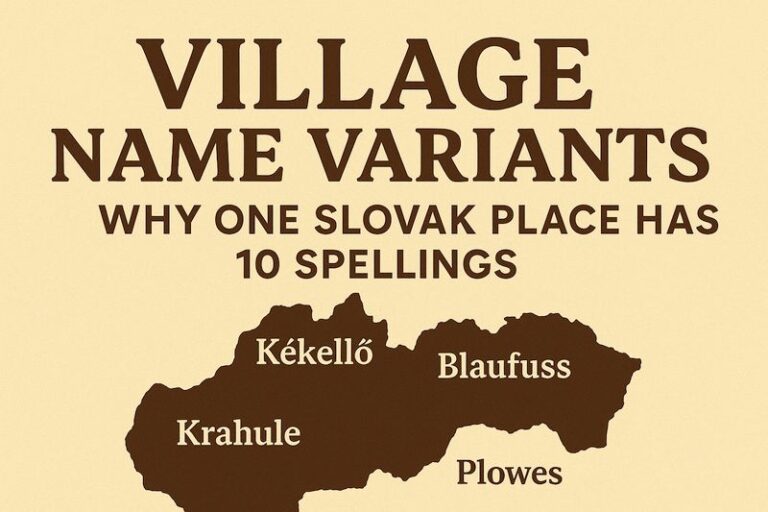
I work with Slovak records every day. The same pattern repeats: Americans search for an ancestral village, but the name doesn’t exist on any modern map. Before assuming the family story is wrong, check these five causes. They explain 90% of “missing Slovak villages.”
1. The village name was recorded incorrectly in the U.S.
Most Slovak immigrants didn’t speak English. Clerks wrote what they heard. Result: distorted spellings that don’t match any Slovak locality.
Common issues:
- Missing diacritics (Zilina vs Žilina, Nizna vs Nižná)
- Swapped letters (Kisfalu → Keesfalo → Keesfall)
- English phonetic spellings (Krivá → “Kreva”)
Fix: Rebuild the name phonetically. Compare all variants against the modern Slovak village list, the historical Hungarian name list, and the church parish list. A single vowel change often reveals the village.

2. The village used a different name under the Kingdom of Hungary
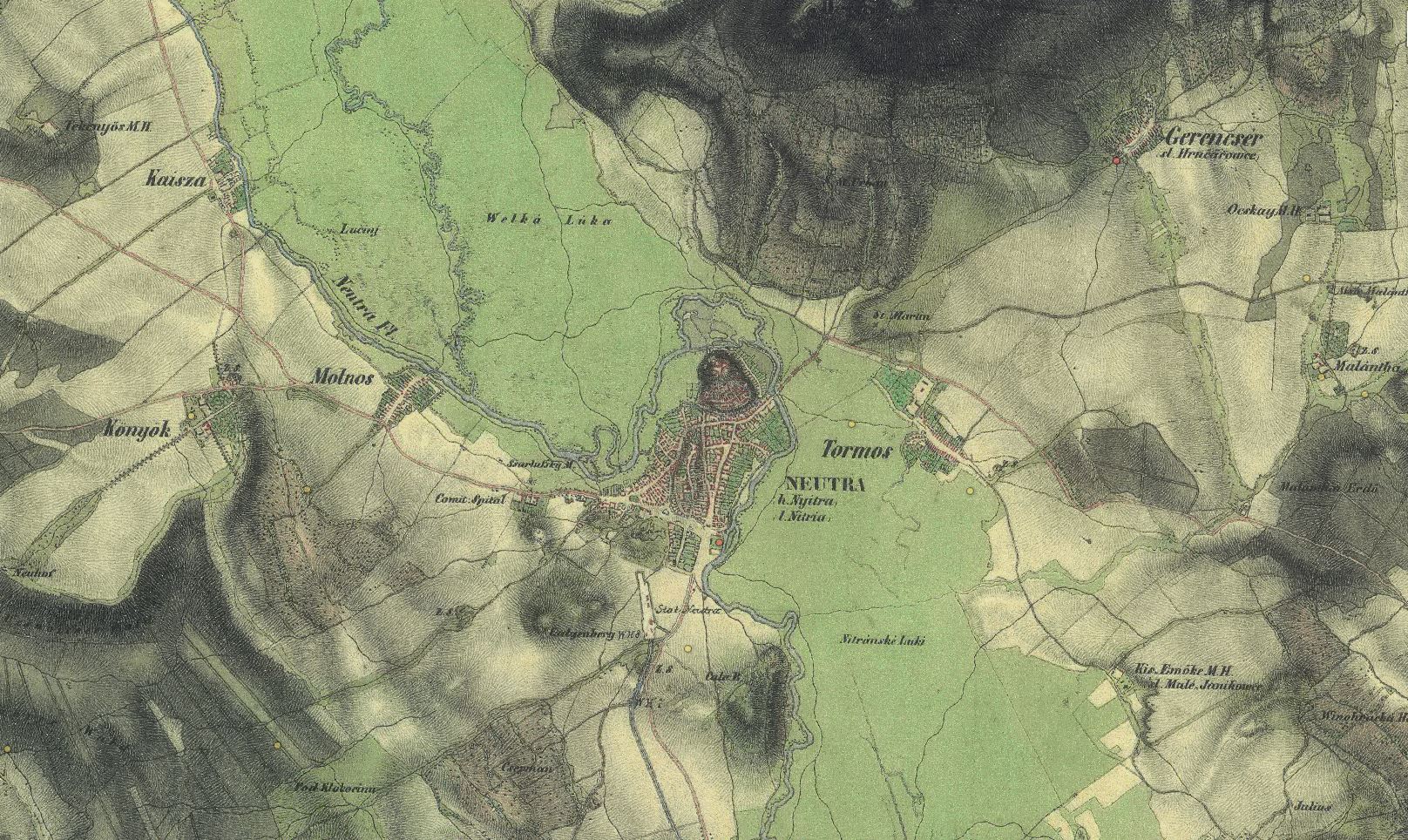
Before 1918, present-day Slovakia was part of the Kingdom of Hungary. Every village had a Hungarian name used in official documents.
Examples:
- Spišská Sobota → Szepesszombat
- Čadca → Csaca
- Trebišov → Terebes
If your ancestor arrived before WWI, U.S. records may show only the Hungarian name. Modern maps won’t recognize it unless you convert it.
Fix: Search by the historical Hungarian name. Use gazetteers that map Hungarian → Slovak equivalents.

3. The “village” was only a hamlet or part of another municipality
Thousands of micro-settlements existed historically but were too small for standalone administration. They were absorbed into larger villages in the 20th century.
Example:
- “Hámre” exists in dozens of locations as a hamlet or mill area, rarely as an independent village.
Fix: Identify the parish. Hamlets always belonged to a parish, and that parish leads you to the correct modern municipality.

4. The village borders changed (sometimes more than once)
Slovakia’s administrative divisions changed several times:
- 1918 (Czechoslovakia)
- 1938–45 (border shifts)
- 1949 (district reorganization)
- 1960 (major district changes)
- post-1993 updates
A village might appear in documents under one county (župa), then later under a completely different district (okres). Searching only by modern district may fail.
Fix: Work with the historical district/county valid at the time your ancestor left. Link it back to the present-day district.

5. The name in the record is not a village at all
This is the most underestimated cause.
U.S. records often list countries, parishes, manors, mountain areas, valleys, or even farm names instead of true villages.
Examples I’ve seen:
- “Czechoslovakia” (country, not a village)
- “Gemer” (county/region)
- “Podhora” (generic geographic label that exists in many places)
- “Majer” (farmstead)
Fix: Determine whether the name is a settlement, a region, or a parish. Then localize the real village underneath it.

What to do next
If you can’t pinpoint your Slovak village, the most efficient path is structured elimination:
- Collect every spelling variant from U.S. sources.
- Convert all to possible Hungarian forms.
- Identify the parish using church records.
- Match the parish to the historical county.
- Narrow it to the correct modern municipality.
This workflow solves most “lost village” cases in under an hour once you understand the system.
If you want a complete step-by-step method (plus maps, name conversions, and look-up tools), my ebooks cover all these pitfalls in detail and show the exact process I use in paid research.