Many Americans with Slovak roots jump into research with enthusiasm but without a clear strategy. That usually means wasted money, random DNA tests, and years lost chasing the wrong villages. This article breaks down the top mistakes and what to do instead.
Many Americans with Slovak roots jump into research with enthusiasm but without a clear strategy. That usually means wasted money, random DNA tests, and years lost chasing the wrong villages. This article breaks down the top mistakes and what to do instead.
1. Skipping U.S. Records and Going Straight to Slovakia
Most Americans try to “start” their research in Slovakia, emailing archives or hiring a local researcher before they have the basics confirmed in U.S. records. That is backwards.
- Always start with U.S. sources: censuses, passenger lists, draft cards, obituaries, church records, and naturalization files.
- Your first non‑negotiable goal: identify the exact village of origin and a usable form of the family name before you contact anyone in Slovakia.
Without that, you pay for searches in the wrong parish and get “no record found” reports that tell you nothing.
2. Treating the Surname as Fixed and “Correct”
Americans often assume their current spelling is the “real” surname and search only that form. In Slovak research, that is a dead end.
- Slovak surnames appear in Hungarian, German, Latin, and Slovak forms, often in multiple variants in the same family line.
- You should build a variant list: without diacritics, with Hungarian endings, Germanized forms, and phonetic American spellings. Then you search all of them.
If you search only one modern American spelling, you will miss most of the historical evidence.
3. Believing DNA Percentages Instead of Records
Many Americans buy a DNA test and then treat the ethnicity estimate as a map of their Slovak ancestry. That is a mistake.
- Ethnicity estimates for Central Europe blend Slovak, Hungarian, Polish, Ukrainian, and “Eastern European” categories; they are not precise at village or even national level.
- Use DNA mainly for: confirming relationships, finding living cousins, and verifying a paper trail, not for “proving” that someone was Slovak.
If your tree and your DNA conflict, fix the tree first. The test is a tool, not the foundation.
4. Misreading Nationality and Ethnicity in Immigration Records
Americans often search for “Slovak” in ship manifests, then assume their ancestor is missing when they don’t see it.
- Before 1918, Slovaks were recorded under political entities like “Hungary,” “Austria‑Hungary,” or under ethnic labels like “Magyar,” “Ruthenian,” or “German.”
- You must search by place (village or district) and by a range of labels, not only “Slovak.”
If you filter only for “Slovakia,” you will exclude most pre‑WWI immigrants from the region.
5. Guessing the Village Instead of Proving It
Family stories about “near Bratislava” or “from the Tatras” are not data. Many Americans pick a village with a matching surname and assume it is theirs.
- Surnames repeat across dozens of villages; only records that combine name + age + religion + village + relative can identify the right one.
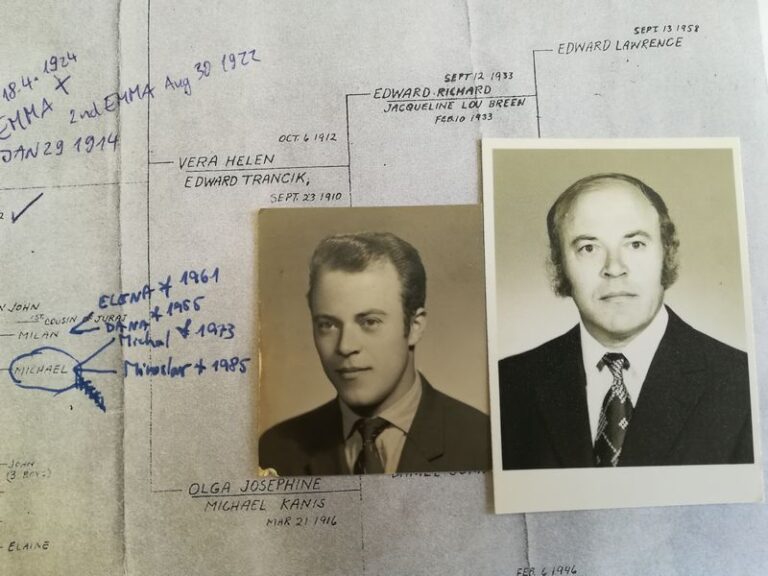
- U.S. documents that often name a village: naturalization papers, WWI/WWII draft cards, church marriage entries, and some passenger lists.
Until the village is backed by at least one solid U.S. source, treat it as unproven.

6. Ignoring Slovak Institutions and Local Expertise
Many Americans try to do everything alone from the U.S. and burn out.
- Slovak genealogy societies, regional archives, and church offices hold records that are not online and may never be digitized.
- A targeted lookup by someone who knows the system is often cheaper and faster than your trial‑and‑error approach over several years.
Try contacting other members in ancestry-oriented Facebook groups, contact regional archives or consult your research with a professional genealogist from Slovakia.
7. Underestimating Language, Scripts, and Diacritics
People think “it’s just another European language” and dive into records without preparation.
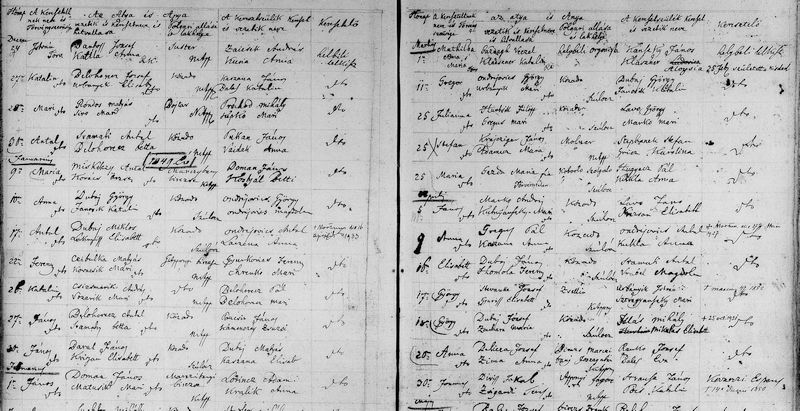
- Records appear in Latin, Hungarian, Slovak, and sometimes Cyrillic, and many use old handwriting styles that are hard to read if you are not trained.
- A basic list of key genealogical terms (birth, marriage, death, widow, farmer, house number) and understanding of diacritics makes the difference between correct identification and a wrong person with a similar name.
If you misread one letter, you can shift an entire family into the wrong village or religion.
8. Assuming Everything Is Online and Indexed
Americans often believe that if they cannot find something on a big commercial site, it does not exist.
- Many Slovak church and civil records are mostly digitized; some are available as unindexed images on FamilySearch or only in local archives.
- You need to be ready to browse images page by page, request scans or copies from archives, or hire someone locally when online coverage stops.
Your strategy must plan for offline work, not just website searches.
9. Ignoring Historical Borders and Place‑Name Changes
People search using only the modern term “Slovakia” or a modern village name and miss older forms.
- Before 1918, the territory of today’s Slovakia was part of the Kingdom of Hungary, and village names were recorded in Hungarian or Latin forms.
- Use gazetteers and historical maps to connect modern Slovak names with their historical equivalents and district affiliations.
If you don’t track jurisdiction changes, you’ll be looking in the wrong archive.
10. Not Tracking Your Work Like a Project
Most Americans treat genealogy as a hobby without structure. For Slovak research, that is expensive.
- Every search should be logged: date, site, collection, search terms, filters, and outcome, including “no result.”
- Clear notes prevent you from repeating the same failed searches, support collaboration with relatives or professionals, and make it easier to turn your research into a family tree.
Think in terms of evidence, not “memories.” That shift alone improves your accuracy and long‑term success.